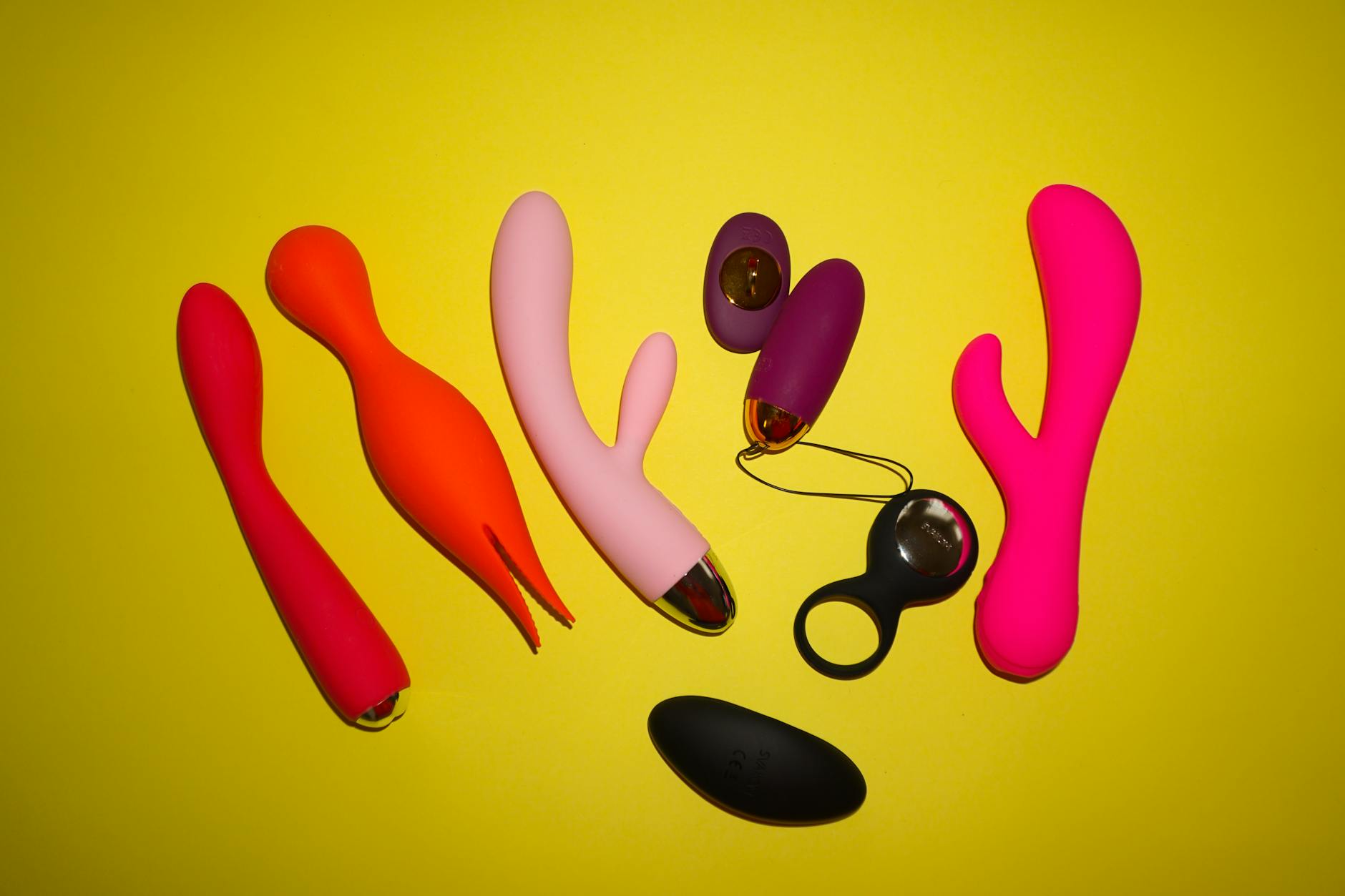
When arousal becomes unpredictable
Let's be real. Perimenopause doesn't just slow down your arousal. It scrambles it. You might feel desperately turned on at 9 a.m., completely numb by lunch, then suddenly interested again at midnight when your partner is asleep. You might want sex one day and find the thought actively unpleasant the next. That's not a personal failure. That's your estrogen doing parkour inside your nervous system.
The frustration isn't the lack of desire. It's the unpredictability. You can't plan around it. You can't explain it to your partner without sounding unstable. And you definitely can't use the same approach to pleasure that worked for decades, because the rules have changed mid-game.
Here's what changes during perimenopause, and what actually helps.
The hormonal reality (and why it matters)
During perimenopause, your estrogen doesn't drop steadily like a sunset. It spikes and crashes. Some cycles you're producing almost normal estrogen levels. Two weeks later, they've plummeted. Your brain is getting whiplash, and so is your body's arousal system.
Estrogen directly affects dopamine sensitivity in the brain. Dopamine is the "I want that" neurotransmitter. When estrogen is high, dopamine receptors are more active, and arousal builds more easily. When estrogen crashes, dopamine signaling weakens. Your brain stops receiving the signal that sex is appealing, even if part of you intellectually knows you want it.
At the same time, progesterone fluctuations are affecting your baseline anxiety and stress response. High progesterone can feel calming. Dropping progesterone feels like your nervous system is jittery and oversensitive. Neither state is great for arousal, but they're contradictory, so you're essentially living in two different nervous systems depending on the week.
Tissue changes happen too. Vaginal tissue gets thinner and less elastic as estrogen drops. This doesn't mean sensation disappears. But it changes the kind of stimulation that feels good. Direct friction might feel raw or uncomfortable. Rhythmic suction, like what the Lem provides, often feels better because it's pressure without drag.
Why lemon clitoral vibrators work when arousal is chaotic
The traditional vibrator you might have used for years relies on your body being somewhat predictably responsive. It assumes consistent lubrication, consistent tissue thickness, consistent ability to build arousal over time. Perimenopause breaks those assumptions.
Lemon vibrators, and the Lem specifically, work differently. The suction mechanism stimulates the clitoris and surrounding tissue without relying on the same friction-based approach. This matters during perimenopause for several reasons.
First, they work with lower baseline arousal. You don't need to be fully lubricated for suction stimulation to feel good. The clitoris itself is stimulated by pressure and release, not by friction. This means you can use a lemon clitoral vibrator even on days when your body feels dry or your arousal feels nowhere near the surface.
Second, they adapt to unpredictable sensitivity. Because suction is gentler than traditional vibration, you can start at lower intensities and build. If your body is having a high-sensitivity day, you can stay in patterns 1 and 2. If you're numb, you can move to patterns 5 and 6. The tool itself doesn't change. Your approach does.
Third, they're consistent in a time of chaos. Arousal patterns are unreliable. Your hormone levels are unreliable. But a lemon sexual toy responds the same way every time. It's one variable you can actually count on.
Creating arousal when it's not automatic
Here's the hard truth about perimenopause arousal. Sometimes it won't come on its own. This isn't a problem with you. It's a neurochemistry issue, and it's temporary.
Instead of waiting for arousal to happen, you can initiate it. Use your lemon vibrator as a tool to wake up your nervous system, not as a finish line.
Start with 10 minutes of low-intensity stimulation. Set the Lem to pattern 2 or 3 and focus on breathing and sensation, not outcome. Your body might surprise you. Stimulation can trigger arousal even when desire isn't present. This isn't forcing it. This is giving your nervous system the information it needs to respond.
If nothing's happening after 10 minutes, that's fine. Stop. You're not broken. Your window might just be closed right now. Perimenopause windows open and close constantly. Sometimes they're 20 minutes long. Sometimes they're a day long. Trying to force pleasure through a closed window is exhausting for no return.
Managing the highs and lows with your partner
If you're in a relationship, the unpredictability affects both of you. Your partner might take the shift in arousal personally, especially if they've never experienced hormonal chaos firsthand.
The most important conversation isn't about sex. It's about information. Tell your partner: "My desire is swinging wildly right now, and it's not about you or our relationship. It's a perimenopause thing. Some days I'll want you. Some days I won't. Some days I'll want to get off alone. Some days nothing sounds good." Naming it removes the shame and the guessing game.
Then separate the conversations. "I'm not in the mood for partnered sex tonight" is very different from "I want to explore my own pleasure." You can be uninterested in partner sex and still want to use your lemon vibrator alone. You can be interested in intimacy and not in genital contact. These aren't contradictions. They're just different truths depending on the day.
The timing game
During perimenopause, you might notice certain times of day when arousal feels more accessible. Some people find arousal comes easier in the morning when cortisol is naturally higher. Others find late evening works better, when they're finally off duty and their nervous system can relax.
Pay attention for two cycles. When do you actually feel interested? Is it early in your menstrual cycle, or later? Is it mornings or nights? Is it when you're alone, or when your partner initiates? This isn't about rigidity. It's about building a map of your own chaos. The more you know about your pattern, the more strategically you can approach your pleasure.
Then use that knowledge. If you know arousal is likeliest mid-morning, maybe that's when you carve out solo time with your lemon vibrator. If evenings are better, protect that time. This isn't selfish. This is working with your neurobiology instead of against it.
Recognizing when you need more help
Some of the unpredictability during perimenopause is normal hormone fluctuation. Some of it isn't.
If you're also experiencing depression, if your anxiety has ramped up significantly, or if the arousal loss feels total and doesn't seem to cycle at all, talk to a doctor. What feels like perimenopause might be the beginning of depression or anxiety, which often arrives during midlife transitions. Both are common. Both are treatable.
Hormone therapy isn't right for everyone. Neither is talk therapy or medication. But it's worth exploring with someone who actually listens to your experience and doesn't dismiss sexual changes as normal aging. They're normal, yes. But normal doesn't mean untreatable or something you have to accept.
Living inside the chaos
Arousal in perimenopause isn't broken. It's differently timed, differently triggered, different in intensity. That's disorienting, especially if you've had decades of relative predictability. But it's also an opportunity to rebuild your relationship with your own pleasure on your own terms. No more waiting for arousal to arrive on schedule. You get to define what pleasure looks like now.
Your lemon vibrator is a tool that works with your new reality, not against it. Keep it close, use it when the window opens, and don't shame yourself when the window closes. Perimenopause is a season. It passes. And the pleasure on the other side can be richer than anything that came before.
People also ask
Can I use a lemon clitoral vibrator if my arousal has completely disappeared?
Yes, but the expectation matters. You're not using the lemon vibrator to "fix" absent arousal. You're using it as a tool to explore whether stimulation can create arousal even when desire isn't present. Sometimes it does. Sometimes it doesn't. Both are fine. If you use your lemon sexual toy for a few weeks and still feel no spark, talk to a doctor. Complete loss of arousal can be perimenopause. It can also be depression, relationship issues, or medication side effects. It's worth investigating.
How do I explain unpredictable arousal to my partner without making them feel rejected?
Be specific and factual. Instead of "I'm not in the mood," try "My hormones are swinging this week, and today isn't a day arousal is accessible for me." Then give them information about when might work better: "If we try in the morning after I've had coffee, I'm more likely to be interested." You're not rejecting them. You're giving them real data about how to connect with you right now.
Should I use my lemon vibrator differently depending on where I am in my perimenopause cycle?
Yes. If you're charting your cycles, you might notice higher baseline sensitivity in the first half of your cycle when estrogen is higher. You might use lower patterns and get excellent results. In the second half, you might need higher patterns to feel the same intensity. This isn't your vibrator changing. It's your body's response to hormones. Adjust your expectations and your pattern settings accordingly.
Can perimenopause arousal unpredictability improve?
Yes, in two ways. First, menopause itself (when you've had no period for 12 months) often brings stability. Your hormones stop fluctuating wildly and settle into a new baseline. Some people find arousal actually gets easier post-menopause. Second, strategies like the ones outlined here help. As you learn to work with your body instead of waiting for it to comply, the unpredictability feels less destabilizing. You stop fighting it.
Do I need a different kind of lemon vibrator for perimenopause than I would use at other times?
Not necessarily. The Lem and other clitoral vibrators work across life stages. What changes is how you use them. You might use lower patterns, take longer warm-up time, and approach pleasure as exploration rather than a guaranteed outcome. The lemon sexual toy doesn't change. Your relationship to it does.
Is it normal to have days where a lemon vibrator feels amazing and other days where it does nothing?
Completely normal during perimenopause. This is your nervous system responding to hormonal shifts. On high-estrogen days, everything feels more sensitive and responsive. On low-estrogen days, your body might feel numb to the same stimulation. This isn't a malfunction. It's perimenopause being perimenopause. Don't assume your vibrator is broken or that you're doing it wrong. Your physiology is just in flux.
What's next
Undoing decades of expecting your arousal to show up on cue takes time. So does learning to use lemon clitoral vibrators in new ways. But the shift is worth it. You're not fighting your body. You're collaborating with it.
If you're navigating relationship changes alongside physical changes, talking to someone trained in both can help. I work with couples and individuals through exactly this transition. You don't have to figure it out alone.
Reach out anytime. Your pleasure deserves attention, and your body deserves understanding.